
A home workspace should help you feel focused without making you feel tense. Whether you work from home full time, manage household tasks, or need a quiet place for occasional projects, your surroundings can shape your daily experience.
A relaxing workspace does not require expensive furniture or a complete room makeover. Small changes, such as improving the lighting, reducing clutter, and adding comfortable details, can make the space feel more inviting. The goal is to create an area that supports concentration while still feeling like part of your home.
Choose the Right Location
Start by deciding where your workspace will be located. If you have a separate room, you have more freedom to arrange furniture and storage. If not, look for a quiet corner in a bedroom, living room, hallway, or dining area.
Consider these factors:
– Natural light
– Noise levels
– Access to power outlets
– Distance from high-traffic areas
– Available space for a desk and chair
– Separation from areas used for rest or entertainment
A workspace near a window can feel bright and pleasant, but direct sunlight may create glare on your screen. If the only available location is in a busy area, use a small room divider, bookcase, or curtain to create a clearer boundary.
The best location is one that fits naturally into your daily routine. A space that is easy to reach and simple to maintain is more likely to remain useful over time.
Select Comfortable, Supportive Furniture
Comfort is one of the most important parts of a relaxing workspace. Your desk should provide enough room for your computer, writing materials, and any other items you use regularly. Avoid choosing a desk that is too small, as crowded surfaces can make the area feel stressful.
A comfortable chair is equally important. Look for a chair that allows you to sit with your feet resting on the floor and your shoulders relaxed. The seat should support an upright, natural posture without feeling rigid.
You may also want to add:
– A footrest if your feet do not reach the floor
– A soft cushion for extra comfort
– A monitor stand or stack of sturdy books
– A small side table for frequently used items
– A desk mat to create a softer, more finished surface
You do not need to buy everything at once. Begin with the items that have the greatest effect on comfort, then make improvements gradually.
Use Soft, Balanced Lighting
Lighting can change the mood of a workspace throughout the day. Natural light is often a good starting point, but it should be balanced with other light sources to prevent shadows and screen glare.
Place your desk so that daylight reaches the space without shining directly into your eyes or onto your monitor. If you write by hand, position a desk lamp on the opposite side of your writing hand to reduce shadows.
A relaxing lighting plan may include:
– Natural daylight during the morning and afternoon
– A warm desk lamp for focused tasks
– Soft ambient lighting for darker hours
– Adjustable brightness for different activities
Choose bulbs with a comfortable brightness rather than using the strongest option available. A lamp with an adjustable arm or shade can help direct light exactly where you need it.
Avoid relying only on overhead lighting. A single bright ceiling light can make a room feel harsh, while several softer light sources create a calmer atmosphere.
Keep the Workspace Visually Simple
Clutter can make it harder to focus, even when the mess is made up of useful items. Try to keep only your most frequently used supplies on the desktop. Store everything else in drawers, boxes, baskets, or nearby shelving.
A simple organization system might include:
– One container for pens and small tools
– A tray for papers that need attention
– A folder for documents you want to keep
– A drawer for cables and electronic accessories
– A small bin for recycling or unwanted paper
At the end of each work session, spend a few minutes returning items to their places. This small habit makes it easier to begin the next task and prevents clutter from building up.
You can also create different zones within the workspace. Keep writing supplies together, place technology accessories in one area, and use another section for reference materials. Grouping similar items makes the space easier to use.
Add Natural Elements
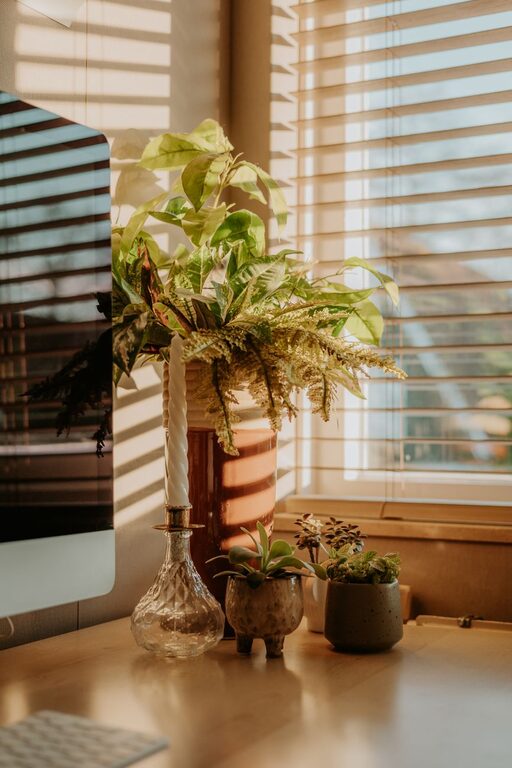
Natural materials and plants can make a workspace feel warmer and more welcoming. You do not need a large collection of greenery. One small plant, a vase of flowers, or a wooden accessory may be enough to soften the look of the room.
Consider adding:
– A low-maintenance houseplant
– A small bowl made from wood or ceramic
– A woven basket for storage
– A framed landscape image
– A natural fiber rug or desk mat
Choose items that are easy to care for and fit the amount of space available. If a plant is not practical, photographs, botanical prints, or natural textures can create a similar visual effect.
Keep decorative objects limited. A few meaningful details usually feel more relaxing than a crowded display.
Choose Calming Colors and Textures
Color has a strong effect on how a space feels. Soft neutrals, muted greens, gentle blues, warm whites, and earthy shades can create a calm background. You can also use your favorite color in small accents, such as a notebook, cushion, lamp, or wall print.
If the workspace is part of another room, use colors that coordinate with the existing decor. This helps the area feel integrated rather than temporary.
Textures can add comfort without taking up much space. Try a woven basket, a fabric pinboard, a soft cushion, or a wooden tray. Combining smooth and textured surfaces creates visual interest while keeping the overall design simple.
Manage Cables and Technology
Visible cables can quickly make a workspace look untidy. Use clips, ties, or a cable box to keep cords grouped and out of the way. Labeling cables can also make it easier to identify the correct cord when you need to move or replace equipment.
Place charging devices in one convenient location. A small charging station can prevent phones, tablets, and accessories from spreading across the desk.
Technology should support the workspace rather than dominate it. When possible, choose equipment that fits the scale of the room and store items you do not use every day.
Create a Clear Work and Rest Boundary
A relaxing workspace should help you focus, but it should also make it easy to finish for the day. If you work in a shared room, use a basket or drawer to put away work materials when your tasks are complete. This simple routine creates a visual separation between work time and personal time.
You can also use a folding screen, curtain, or movable shelf to define the area. Even a small boundary can make the workspace feel more intentional.
At the end of the day, close open notebooks, turn off unnecessary devices, and clear the main surface. This gives you a clean starting point the next time you use the space.
Personalize the Space Thoughtfully
A workspace should reflect your personality, but it does not need to display everything you enjoy. Select a few items that make you feel comfortable and motivated, such as a favorite photograph, a small piece of art, or a meaningful object.
Avoid filling the area with too many reminders, notes, or decorations. Choose pieces that support a calm mood rather than creating extra visual noise.
The most successful home workspaces are practical, comfortable, and personal. With suitable lighting, organized storage, supportive furniture, and a few thoughtful details, you can create a space that feels peaceful and works well every day.
About the Author